Reflections on Teamwork, Vulnerability and First Response
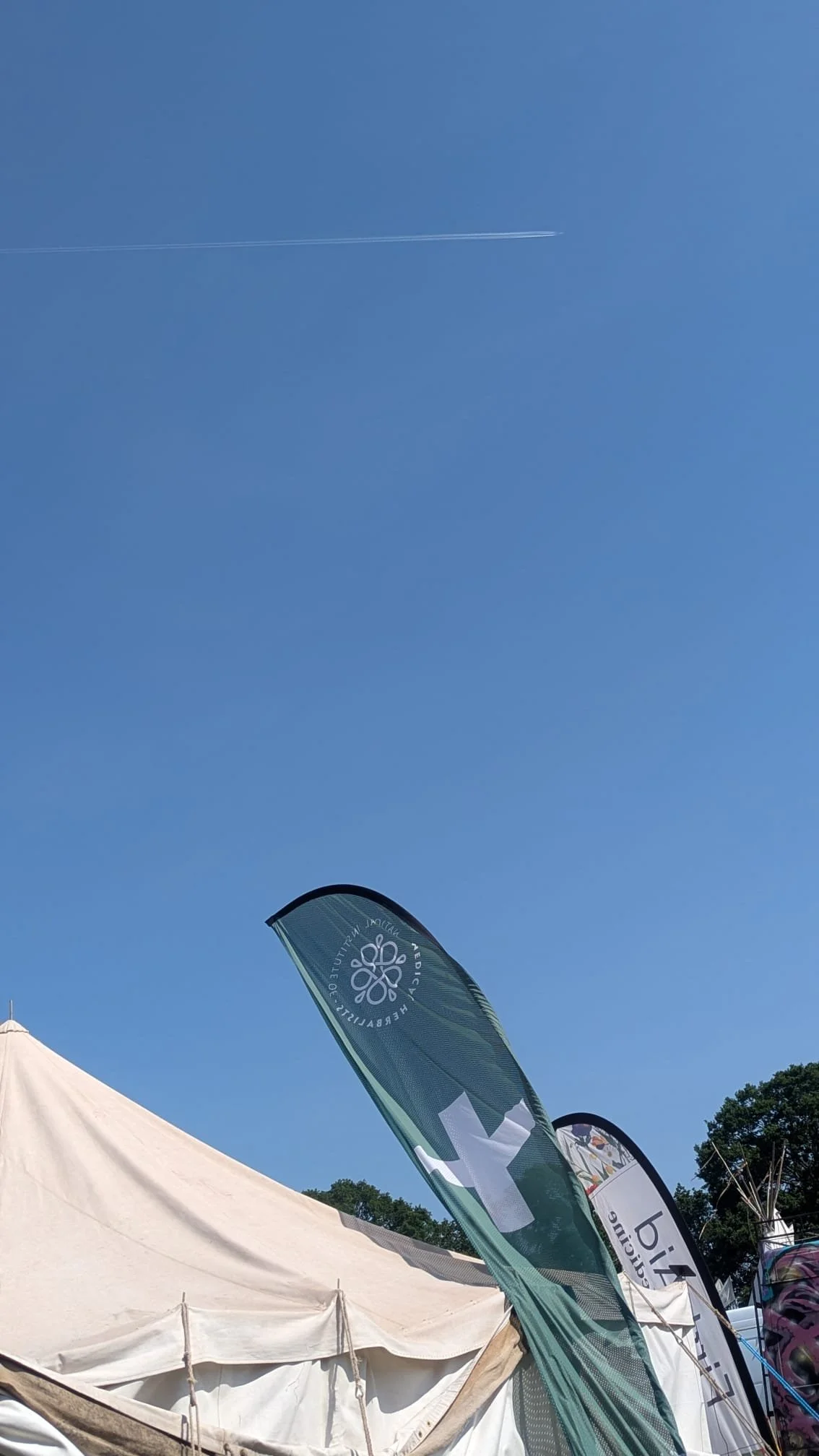
Photo taken by Fox, Small World Spring May 2026
There’s something humbling about standing in a field, radio crackling, surrounded by a team of people who have your back completely. This past week I was working as a FREC first responder. Offering acute medical and herbal support alongside paramedics at a sunny festival. It was a powerful reminder of why I do this work. Of how much we rely on one another when things get real.
Supporting people in moments of crisis is never just about clinical skill. It’s about emotional steadiness, presence and the ability to stay grounded when someone else is unravelling. But what struck me most this week wasn’t the emergencies themselves, it was the team. The way we moved together, filled each other’s gaps and allowed ourselves to be seen. Not just as responders, but as humans.
In first response, there’s often an unspoken pressure to be the one who “knows,” who stays unshakeable, who doesn’t falter. This week showed me that real support happens when we make room for vulnerability, not perfection. When someone says, “I’m not sure,” or “I need a moment,” something shifts. The ego steps aside and the real work begins.
That’s where support becomes genuine, not performative or hierarchical, but rooted in trust. It’s the same principle I see in ecosystem thinking: every part of the system matters and nothing thrives in isolation. A team is an ecosystem. Each person brings something different, experience, calm, humour, technical skill, intuition. The whole becomes stronger than the sum of its parts.
This week asked a lot from all of us. Emotional resilience. Practical skill. Technical awareness. The ability to make decisions quickly and compassionately. The willingness to sit with someone’s fear, confusion, or pain. And through it all, I watched my team show up with such depth of care that I felt genuinely proud to stand beside them.
I was in awe of the knowledge around me, the paramedics with decades of experience. The responders who could read a situation before a word was spoken. The quiet competence that comes from years of seeing people in their most vulnerable moments. And I was equally moved by the moments where someone said, “I’m not sure,” “Can you check this with me,” or “I need a second pair of eyes.” Those were the moments that made us a team rather than a collection of individuals.
It reminded me of herbal medicine, too. A single herb can do a lot. But a well thought out blend, where each plant supports the others, creates something far more powerful. The synergy matters. The relationships matter. The way each part strengthens the whole matters. You can explore this idea more through herbal synergy.
In the same way, a first‑aid team is not defined by its strongest member, but by the way everyone works together. When we let go of ego, when we stop trying to be the one who “knows everything,” we create space for real learning. And it’s often in those vulnerable moments, the ones where we admit uncertainty, that the deepest growth happens.
I’m grateful for the people I worked with this week. For the laughter between shifts, the quiet check‑ins, the shared debriefs, the willingness to lean on one another. I’m grateful for the reminder that supporting others is only sustainable when we are also supported. And I’m grateful for the chance to keep learning, not just the technical skills, but the human ones.
Because in the end, first response isn’t about being heroic. It’s about being present. It’s about meeting people where they are, with clarity and compassion. It’s about showing your whole self, strengths, gaps, uncertainties and all and trusting that the team will hold the rest.
And maybe that’s the lesson I’m taking forward. When we allow ourselves to be seen, we allow ourselves to belong. And when we belong, we can offer the kind of care that truly makes a difference.
If you’re curious about how this work weaves into my herbal practice get in touch And if you’ve ever wondered what it feels like to be part of a team that functions like an ecosystem, I hope this reflection gives you a glimpse.
If you’d like to experience a festival where medical herbalists work alongside first responders, Small World Festival in Kent is a beautiful example. Their medic tent brings together FREC responders, paramedics and herbal practitioners offering acute, on‑the‑ground support in a calm, community‑centred space. It’s a place where you can see how herbal medicine and frontline care weave together in real time.
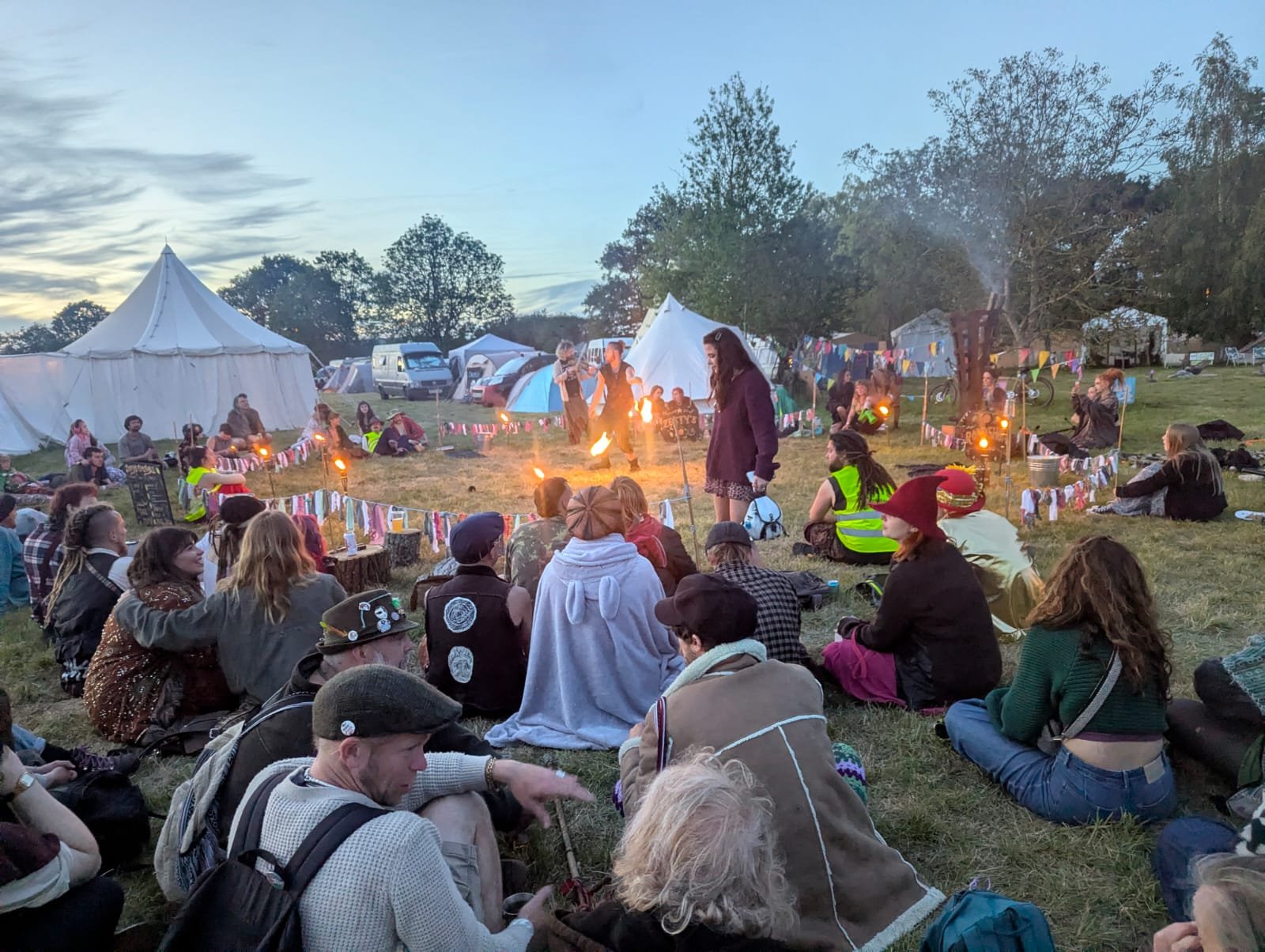
Photo taken by Bobbie, Small World Spring, May 2026.