The Quiet Power of Making Your Own Medicine
There is a particular kind of stillness that comes when you step outside with a basket and no fixed plan. Just the intention to meet whatever the season is offering. This past week, the hedgerows have been full of gifts. Soft young nettles, sweet elderflower, the earthy green of plantain and the bright purple threads of ground ivy. These are the plants I’ve been gathering, slowly and respectfully. Mostly to make a seasonal tea that supports hay fever and the general fogginess that arrives with high pollen days.
Each plant brings something different. When they come together, they create a gentle, steadying blend that helps the body settle during allergy season. Plantain soothes and cools irritated tissues. The creamy heads of elderflower, with their soft, honeyed scent, offer a light clearing action. The leaves and flowers of ground ivy help shift congestion in the respiratory tract. When combined with plantain they become a wonderful lung tonic. Nettle leaves nourish and modulate the body’s response to pollen and offer trace minerals and high levels of iron. This tea is a simple combination that works in that quiet, reliable way. The way herbs often do, not dramatic, not forceful, just supportive. A way to improve health in general.
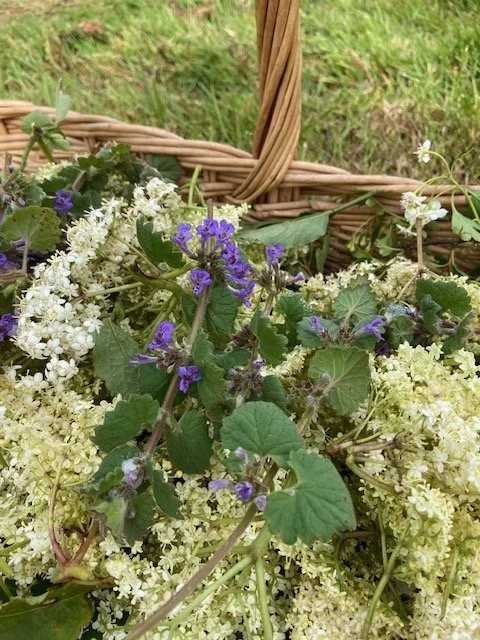
Elderflower and ground ivy, Maker, Cornwall.
Image Rame Herbal Health.
There is something deeply empowering about gathering these plants yourself. Gathering from a place you know, or from a familiar tree, is a way of embracing the season, rather than observing it. You’re slowing down enough to notice what’s growing, what’s changing, what’s needed. And stepping into a rhythm that is older than any of us and letting it guide you.
For me, this is one of the most important parts of herbal medicine. Not only about the remedies themselves, but about the relationships we build with the landscape around us. When you gather herbs locally, you’re tuning into the exact environment your body is living in. You’re working with the plants that are responding to the same weather, the same soil, the same shifts in light. There’s a kind of resonance in that, a closeness that can’t be replicated by something bought in a packet.
Collecting your own herbs is also one of the most sustainable ways to work. You take only what you need, from places you know, in amounts that don’t disturb the plant or the ecosystem around it. You learn to notice when a patch is thriving and when it needs to be left alone. You become part of the landscape rather than a consumer of it. And of course, it’s free, which has its own kind of liberation. In a world where so much of health has become commercialised or inaccessible.
But perhaps the most empowering part is the sense of responsibility it brings. When you make your own medicine, you’re taking an active role in your wellbeing. You’re not waiting for someone else to fix something you’re tending to yourself in small, steady ways. That’s the heart of my work. Helping people access that sense of agency, showing them how simple it can be to support themselves with what grows around them. Herbal medicine doesn’t need to be complicated. It just needs attention, curiosity and a bit of time.
Of course, not everyone can get out to gather herbs and that’s absolutely fine. If you’d like to try the seasonal hay fever tea I’ve been making, get in touch and I’ll happily send some your way. You can also explore herbal first aid ideas if you’re building your own home apothecary.
For those who want to learn how to do this themselves, I run local workshops where we gather, make, taste, and explore the plants of the season together. The next one is with Motts Sauna on July 11th where we’ll be making summer cooling remedies. Things to soothe bites and stings, calm hot skin and help the body stay comfortable on warm days. These workshops are a lovely way to connect with the plants, the land and with others who are curious about herbal medicine. They’re gentle, practical and rooted in the everyday.
What I love most about this work is how it brings people back into relationship with themselves. When you gather herbs, you have to slow down. You have to look closely. You have to be present. And in that presence, something shifts. The mind softens, the breath deepens, and the body remembers its place in the wider world. It’s a simple act, but it can be profoundly grounding.
So whether you’re out collecting nettles from a familiar footpath, or simply brewing a cup of tea I hope this season brings you a sense of connection. To the land, to the plants and to yourself. If you’d like to learn more about my approach, explore holistic herbal care or would like some seasonal herbal tea, get in touch.