A Herb Walk in Spring
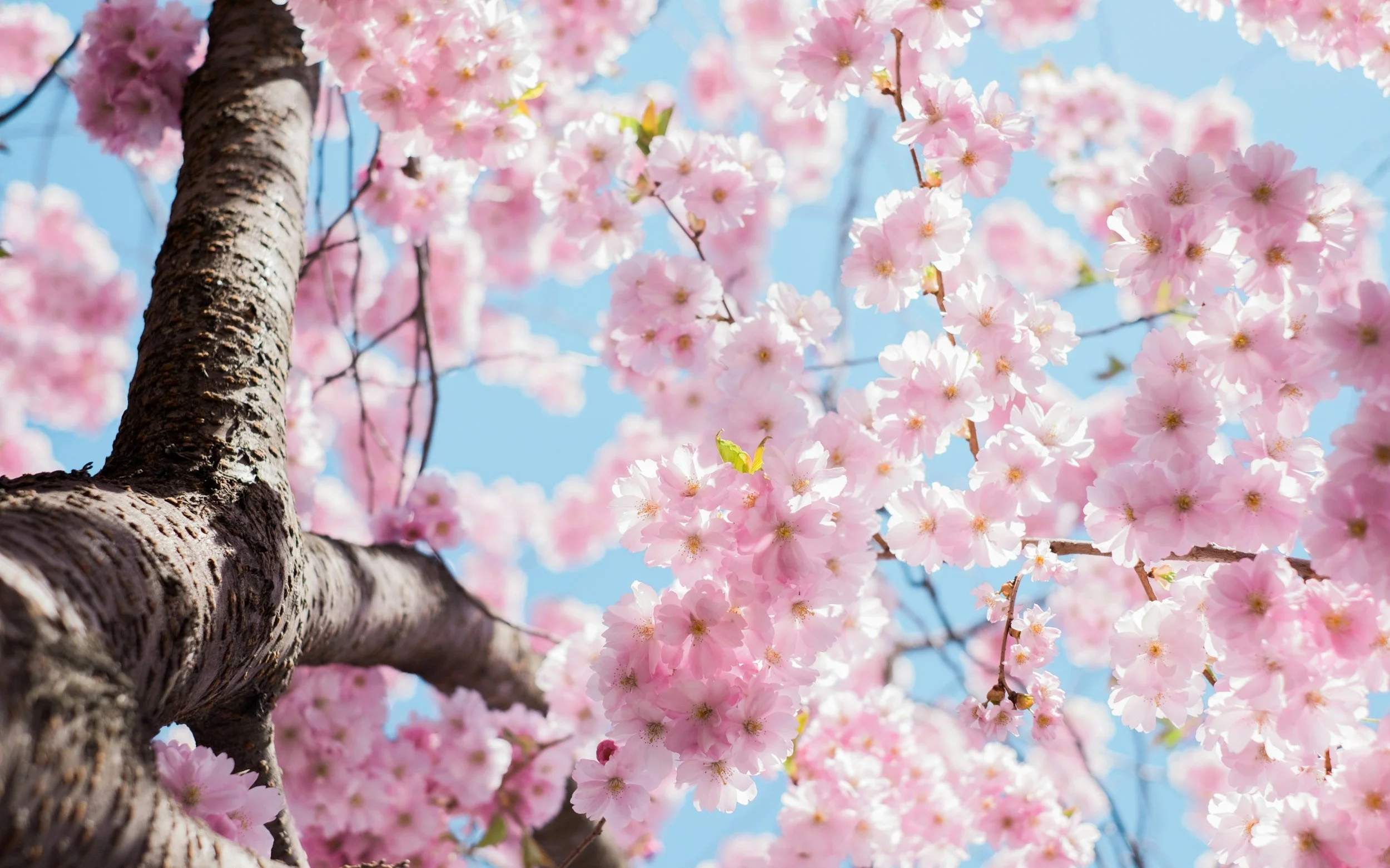
Early cherry blossom, Spring, Cornwall.
Spring in Cornwall carries a quiet kind of magic. As hedgerows awaken and the days stretch a little longer, some of the year’s most useful wild herbs begin to appear. For anyone curious about foraging, spring is a wonderful time to begin. Plants are fresh, vibrant and often easier to identify before summer growth becomes dense. With a little knowledge and a careful eye, you’ll discover that many delicious and medicinal herbs are growing all around you.
One of the first plants to look for is wild garlic. Often you’ll smell it before you see it. Its unmistakable garlicky scent drifts through damp woodlands from March onwards. Growing in lush green patches it has long, strap like leaves with later delicate white star-shaped flowers. If the leaves don’t smell strongly of garlic when crushed, don’t pick them. Lookalikes such as lily of the valley can be toxic. Wild garlic is wonderfully versatile in the kitchen. Blend the leaves into pesto and stir through soups or chop into butter. Traditionally, it was valued for supporting circulation and digestion, much like cultivated garlic.
Another common spring herb is nettle, often dismissed as a nuisance but actually one of the most nourishing wild plants available. Young nettle tops appear from early spring along field edges, paths and hedgerows. Wearing gloves, pick only the top few leaves where the plant is tender. Once cooked or dried, the sting disappears. They are rich in iron, vitamins and minerals and have long been used as a restorative spring tonic after winter. A simple nettle soup is a classic way to enjoy them, and they also make an excellent herbal tea.
Nettles also carry a surprising amount of folklore. In many parts of Britain they were seen as protective plants, believed to ward off lightning and negative energy when hung in the home. Some rural traditions held that a patch of nettles growing near a house meant the land was fertile and strong. Old sayings suggest that grasping a nettle firmly would prevent it from stinging. While timidly brushing it would make the sting worse, often used as a metaphor for facing life’s challenges with confidence.
Ground ivy is another humble herb worth noticing in spring. It grows low to the ground with small scalloped leaves and delicate purple-blue flowers. You’ll often find it trailing along hedgerows, woodland edges and shady banks. Ground ivy has a long history in traditional herbal medicine, particularly for supporting the upper respiratory system. It has been used to help ease congestion, soothe coughs and clear mucus from the sinuses and lungs. A mild infusion made from the fresh leaves can be used as a tea. Historically it was also used in brewing before hops became common, helping to flavour and preserve ale.
Keep an eye out as well for cleavers, sometimes called goosegrass or sticky willy. These scrambling plants cling to clothing and fur thanks to tiny hooked hairs. You’ll find them weaving through hedges and garden edges. The young shoots are mild in flavour and can be added to salads or blended into green juices. Traditionally, they are associated with the lymphatic system, helping the body’s natural cleansing processes in spring.
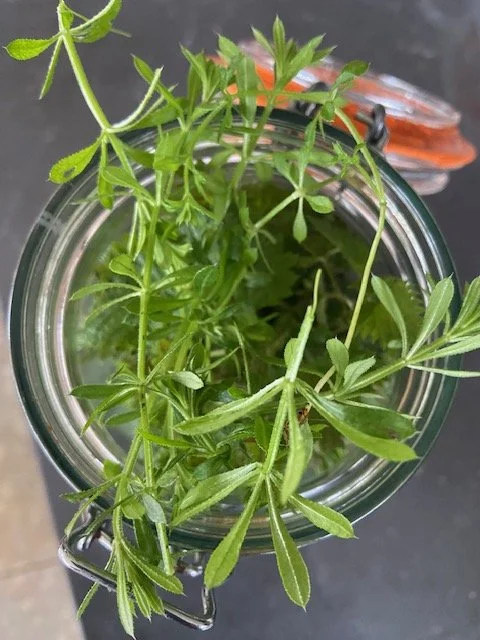
Cold water cleavers infusion, Millbrook, Cornwall.
Perhaps one of the most cheerful herbs you’ll see is the bright yellow dandelion. Though often pulled from lawns, every part of this plant has been used for food and medicine. The young leaves are slightly bitter and are excellent in salads, stimulating digestion after heavier winter meals. The flowers can be made into syrups or even dandelion wine, a traditional countryside favourite. While the roasted roots have long been used as a coffee substitute.
Dandelions also have a rich place in folklore. In old country traditions they were associated with the sun and believed to bring resilience and strength. Some stories say that carrying a dandelion could help attract good fortune. Others believed the plant’s deep roots symbolised endurance and the ability to thrive in difficult conditions. Herbal lore often viewed dandelion as a plant that reminded people of nature’s persistence. Returning year after year no matter how often it was pulled up.
If you’re new to foraging, remember a few simple guidelines. Always be completely certain of your identification, harvest sustainably by taking only what you need. And avoid areas close to busy roads or sprayed fields. Leaving plenty behind ensures these plants continue to thrive for wildlife and future foragers alike.
Spring herbs invite us to slow down and notice the landscape in a new way. These simple plants connect us to centuries of seasonal knowledge and to the living landscape of Cornwall itself.