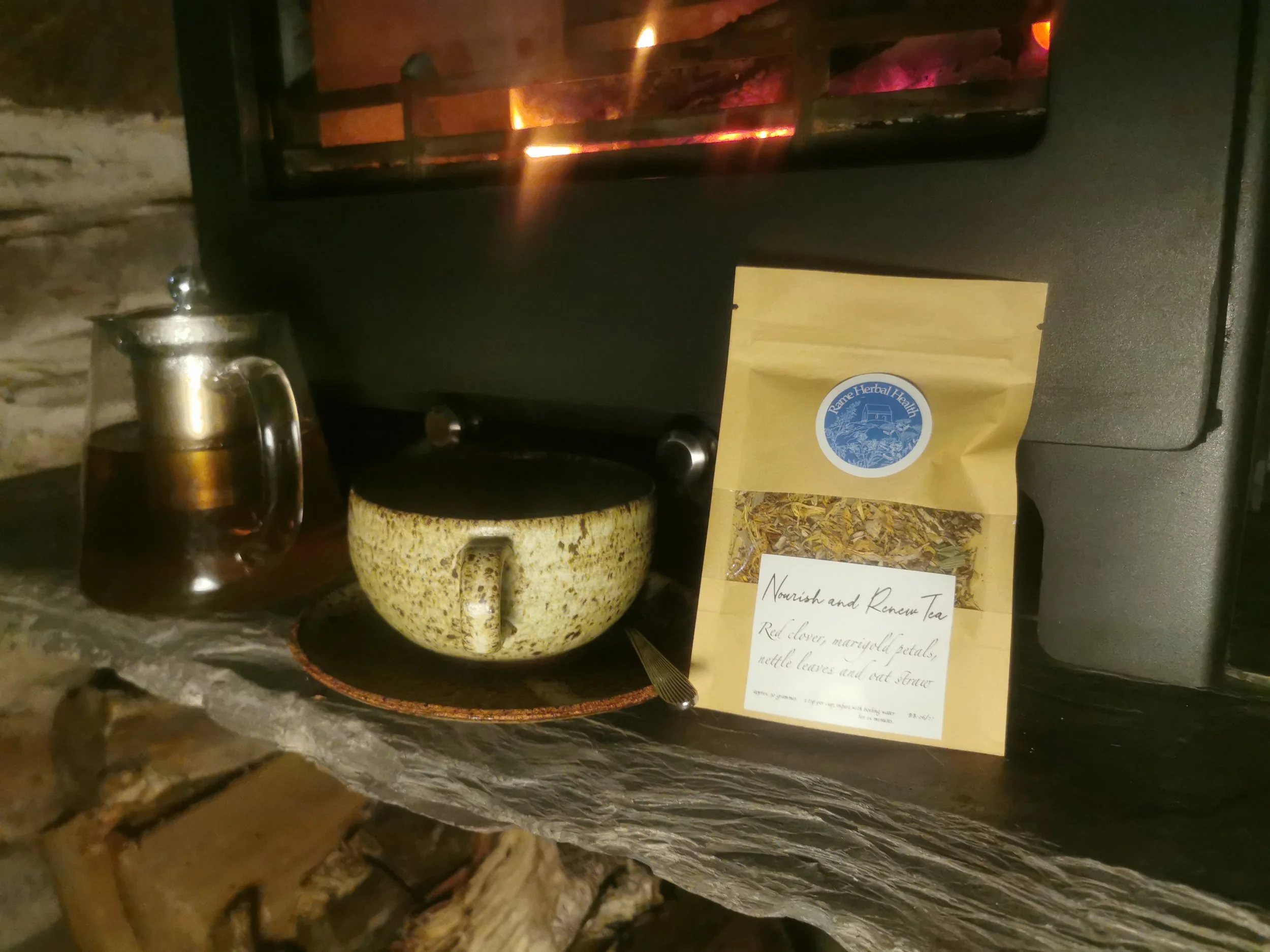
Photograph taken at home November 2026
As a Medical Herbalist, I often prescribe teas. One of the most common questions I am asked is, "What makes a tea medicinal?" The answer lies in more than the plants alone. Quality, preparation, dosage and even the act of stopping to drink the tea all play a part.
The first consideration is the quality of the herbs, not all teas are created equally. Many commercial tea bags contain finely cut material that has been stored, processed and packaged long before it reaches your cup. The more a herb is processed, the greater the potential loss of its aromatic oils and delicate active compounds. Open, whole-leaf herbs often allow you to see, smell and experience the plant in a way that is much closer to how it was originally grown and harvested.
The difference is immediately apparent when you open a jar of freshly dried peppermint, chamomile or lemon balm. The aroma alone tells you that something valuable remains intact.
That said, quality alone does not make a tea medicinal. Dose matters too.
Herbal tea is often prepared in the same way as a conventional cup of tea. Small amounts of herb and drinking it occasionally. Whilst this is perfectly lovely, medicinal herbal teas are typically made with a more generous amount of herbs. I mostly recommend drinking tea throughout the day to support their therapeutic effects. Allowing active compounds to enter the bloodstream and maintain their presence within the body. Less of an occasional drink and more of a gentle therapeutic companion.
Yet there is another aspect of tea that fascinates me.
A patient once remarked that every time they prepared their herbal tea they felt better before they had even taken a sip. I understood exactly what they meant.
The act of stopping, preparing the herbs and waiting for the infusion creates a pause within the day. In our increasingly busy world, this may be one of the most overlooked medicines available to us.
Historically, tea has often been associated with care and recovery. In Britain, offering someone a cup of tea has long been a response to shock, grief, worry or distress. We instinctively ask someone to sit down, wrap their hands around a warm mug and take a moment. The tea itself may play a role, but equally important is the invitation to stop, breathe and gather oneself.
Many cultures have taken this understanding even further. In Japan, the tea ceremony elevates tea preparation to an art form rooted in presence and mindfulness. In China, tea traditions developed over centuries celebrate attentiveness, hospitality and connection. The details may differ, but both recognise that ritual can be as important as what we consume.
This is where tea begins to blur the boundaries between nourishment, ritual and medicine.
For some people, medicine might be chamomile helping them unwind after a difficult day. For others, it may be the familiar mug they reach for every evening, the few moments of quiet before bed. Simple acts of choosing to care for ourselves.
This becomes less of a drink and more an invitation to pause. To pay attention and positively contribute to our own wellbeing. That, in itself, is part of the medicine.